Casualty’s Quietest Fear: Stevie Nash Faces the Future She Can’t Control
In Holby City General, Stevie Nash is usually the one in control. She’s decisive, demanding, and rarely shows hesitation when lives are on the line. In the chaos of the emergency department, she thrives on certainty and action. But away from the noise of resus and sirens, Casualty is now placing Stevie in a far more unsettling position — one where there are no quick fixes, no protocols to hide behind, and no guarantees.
Her oncology appointment changes the tone of everything.
It starts with something deceptively small: a questionnaire. A routine form, the kind Stevie has probably seen hundreds of times for other patients. This time, one question lands differently — plans for the future, family, the shape of life beyond the hospital walls. It’s a reminder that this isn’t just a test result waiting behind a closed door. It’s a moment that could rewrite the next chapter of her life.
For someone who lives by preparation and control, the waiting is unbearable.
Stevie’s frustration surfaces as anger, sharp and immediate, because that’s the emotion she knows how to handle best. Fear is quieter. Fear sits in the background, asking questions she can’t answer yet. What if the results change everything? What if the future she imagined isn’t available anymore? What if the certainty she relies on simply… disappears?
The power of this storyline is in its restraint. There are no dramatic collapses, no speeches in crowded corridors. Instead, there’s silence. There’s a waiting room. There’s time — and time, in this case, is the enemy.
Stevie is used to being the person who supports others through moments like this. She’s the mentor who pushes juniors to be stronger, the colleague who keeps things moving when emotions threaten to slow the work down. Now she’s on the other side of that divide, and it’s deeply uncomfortable. The hospital, usually her territory, suddenly feels unfamiliar — not because she doesn’t belong there, but because she’s there as a patient, not a commander.
That shift matters.
It strips away the armour she normally wears and reveals someone who is just as vulnerable as the people she treats. The irony is painful: Stevie knows exactly what bad news can look like. She’s seen the outcomes. She’s held the hands. And now she has to sit with the possibility that she might be the one receiving it.
At work, nothing stops. The ED doesn’t slow down for personal crises, and Stevie doesn’t let it see how shaken she is. She keeps pushing Kim, keeps enforcing standards, keeps playing the role everyone expects from her. But underneath, the questions are getting louder.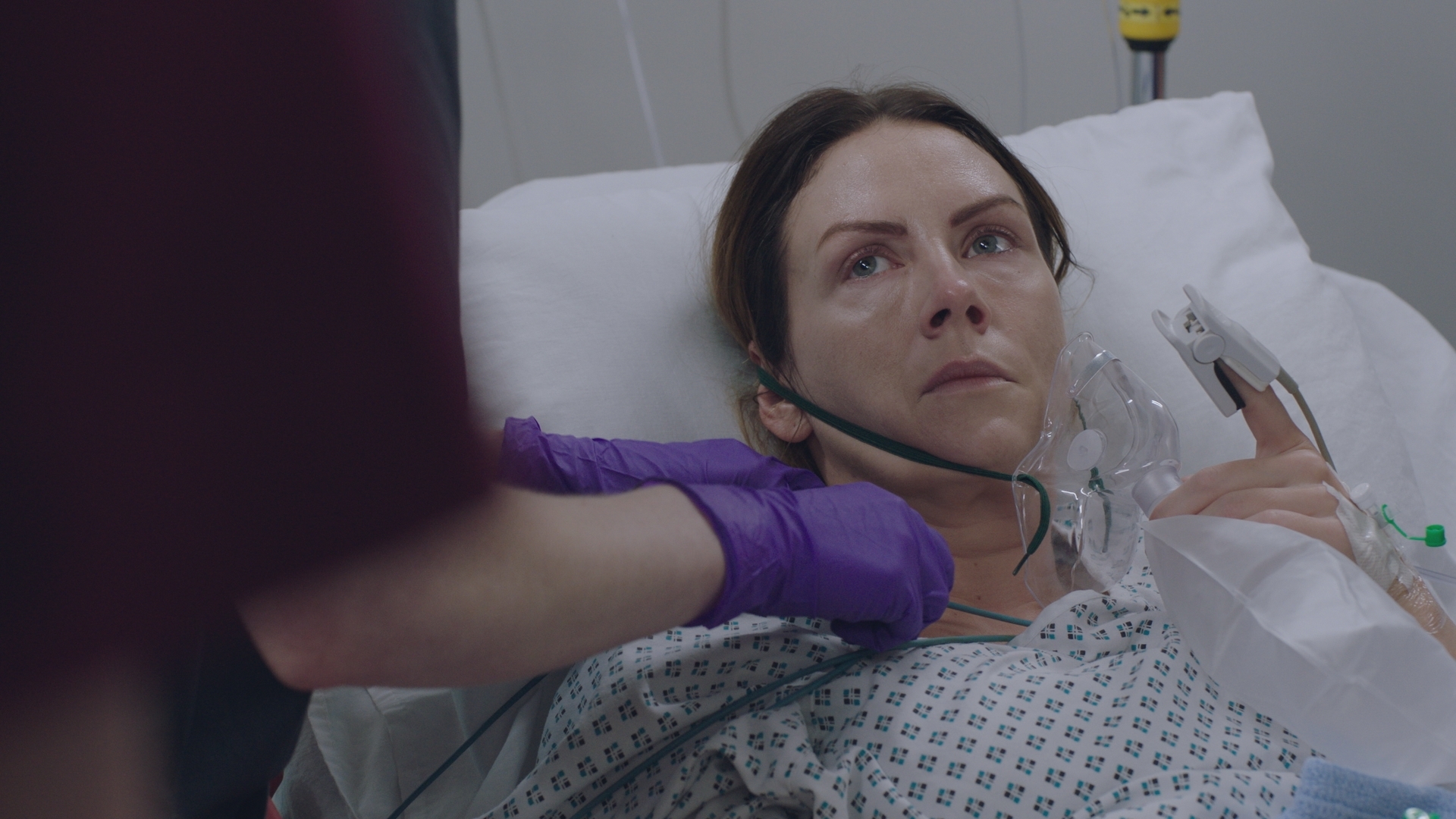
What does strength look like when you don’t have answers?
This storyline isn’t about diagnosis details or medical jargon. It’s about anticipation. About the emotional weight of not knowing. About the way uncertainty can be more frightening than certainty, even when certainty might be bad news.
It also adds new depth to Stevie’s character. The tough-love mentor, the uncompromising professional, is suddenly framed by something deeply human: the fear of losing control over her own story. It doesn’t make her weaker. It makes her real.
As Casualty continues this arc, the real tension isn’t just in what the results will say. It’s in how Stevie will choose to live with whatever comes next. Will she retreat behind the walls she’s built so carefully? Or will this be the moment that changes how she lets people see her?
In Holby, emergencies are loud and obvious. Stevie’s isn’t.
And that’s exactly what makes it so powerful.