Jack gives up and Leave Jabot – Says 7 words that make “PHYLLIS CRY” The Young And The Restless
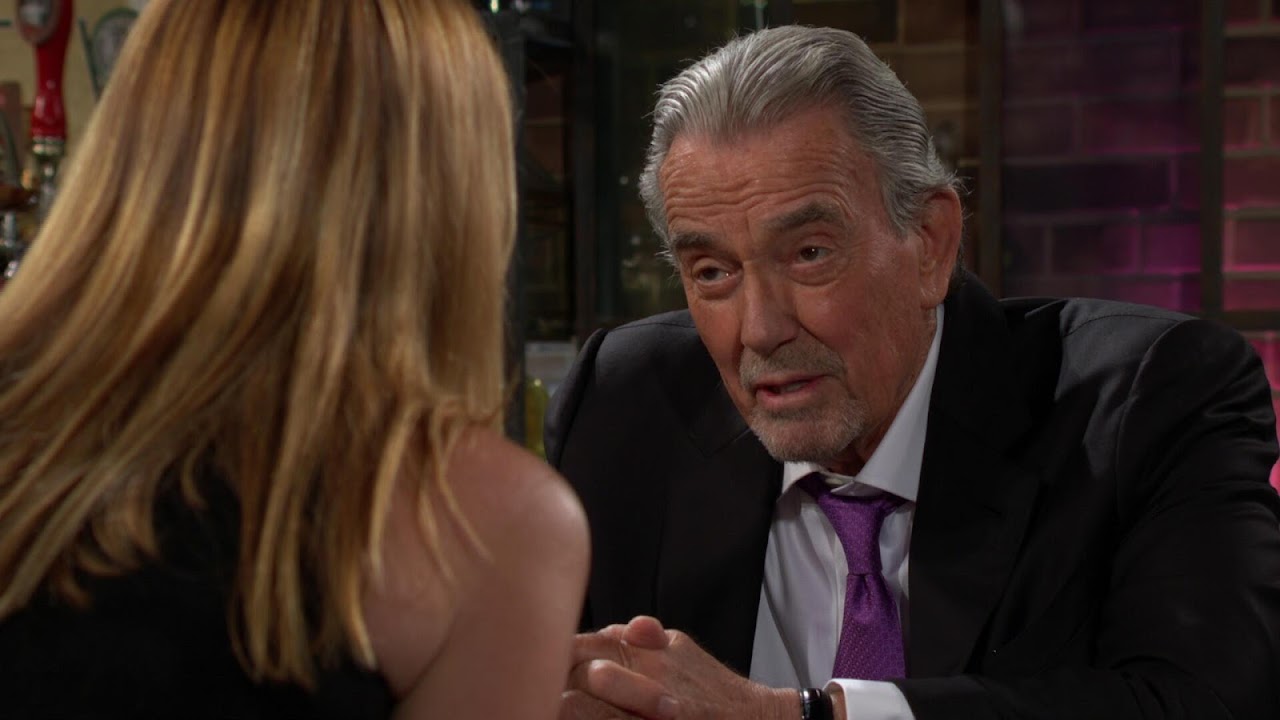
In The Young and the Restless: The Seven Words That Broke Her Heart, power, pride, and passion collide in a story that marks the end of an era for Genoa City’s most enduring titan — Jack Abbott. This film adaptation transforms corporate warfare into emotional opera, following Jack’s fall from grace and the seven words that leave Phyllis Summers shattered beyond repair.
The story opens with an aerial shot of Jabot Cosmetics headquarters — sleek glass towers glinting in the morning light. Inside, tension hums like static. Board meetings have turned to battlegrounds, ambition to bitterness. Jack, once the heart and soul of the company, now stands isolated amid whispers of betrayal and shifting alliances. Decades of loyalty have given way to exhaustion. The empire he built no longer feels like home.
Phyllis Summers, fiery and brilliant as ever, watches the man she once loved unravel. Their relationship — complicated, passionate, and perpetually caught between love and rivalry — has become collateral damage in Jabot’s corporate war. Rumors swirl of underhanded deals and double-crosses involving Billy, Diane, and the very people Jack trusted most. The tension crescendos when a board vote leaves Jack humiliated — his authority stripped, his vision dismissed.
The first act unfolds like a modern tragedy. In the boardroom’s cold glow, Jack faces his colleagues for what will be the last time. His voice, once commanding, trembles with both anger and resignation. “This isn’t the company I fought for,” he says, each word cutting deeper than the last. Phyllis tries to interject, to remind him that he still has allies, but Jack’s expression says everything. He’s already made his decision.
After the meeting, the camera follows Jack through Jabot’s corridors — his footsteps echoing in slow motion, his reflection fragmented in the glass walls that once symbolized transparency but now mirror only betrayal. Flashbacks blend with the present: a younger Jack shaking his father’s hand, his first partnership with Phyllis, the long nights building Jabot from nothing. Every frame reminds him — and the audience — how far he’s fallen from that dream.
Meanwhile, Phyllis waits in his office, her usual defiance melting into worry. She’s seen him at his strongest, his weakest, and everything in between. When he finally enters, she senses the finality in his demeanor. “Jack,” she whispers, “don’t do this.” But he’s beyond persuasion. His eyes are tired, his voice low and deliberate. “I’m done, Red,” he says softly. “I can’t fight ghosts anymore.”
The confrontation that follows is pure cinematic tension. Phyllis pleads with him — not for the company, but for himself. She reminds him that he’s a fighter, that walking away will only let the others win. But Jack’s silence speaks louder than her arguments. He turns to the window, staring out at the Genoa City skyline. The city that once symbolized ambition now feels like a cage.
Then come the seven words — quiet, devastating, and final. He turns back to her, eyes glistening with the weight of decades, and says, “You were right — I can’t stay anymore.”
The line lands like a thunderclap. Phyllis freezes. Her lips part, but no sound escapes. Those seven words — simple yet loaded with surrender — carry not only Jack’s resignation from Jabot but also his emotional withdrawal from everything they shared. The camera lingers on Phyllis’s face as tears fill her eyes. For all her bravado, for all her years of manipulating outcomes, she realizes she’s lost him in a way that no scheme can undo.
The next sequence is heartbreak in motion. Jack packs his things in silence: his father’s pen, framed photos, mementos of a life defined by legacy. Billy watches from the doorway, guilt flickering in his eyes but words failing him. Even Diane, the supposed victor in the corporate struggle, looks uneasy — aware that in pushing Jack out, she’s broken something larger than business.
Phyllis follows Jack to the lobby, desperate for one last conversation. The elevator doors close between them, her reflection disappearing as the music swells — a haunting piano score underscoring the sense of irrevocable loss.
The film’s second act moves into aftermath. News of Jack’s departure ripples through Genoa City. The Abbotts are shaken; the employees whisper; even Victor Newman raises an eyebrow at his longtime rival’s retreat. Without Jack, Jabot feels hollow — a kingdom without its king.
Phyllis, alone in her apartment, replays their last conversation over and over. Each time, those seven words echo, not as defeat, but as an ending she never prepared for. In a moment of quiet reflection, she finally admits to herself what she could never tell him: that beneath all the conflict, she still loved him.
The final act shows Jack walking along Abbott Park at dusk, the skyline behind him fading to twilight. He pauses at a bench, sets down his briefcase, and exhales. His voiceover delivers the emotional truth of the film:
“Sometimes the bravest thing a man can do is stop fighting — and start living again.”
As the credits begin to roll, Phyllis arrives at the park just a moment too late. She sees the empty bench, the folded resignation letter beside a single red rose — her rose — and realizes that this time, he’s truly gone.
The film fades to black on a single lingering image: the Jabot logo dimming as the lights go out, symbolizing the end of an empire — and the heartbreak of two souls who could never stop loving, even when they had to let go.