Casualty’s Most Human Support System: How Cam Becomes Siobhan’s Anchor After the Attack
In the aftermath of Siobhan McKenzie’s assault, Casualty isn’t rushing toward easy answers or quick recovery. Instead, it’s telling a quieter, more emotionally honest story — one about survival, trust, and the unexpected ways people who have been hurt learn to hold each other up. At the centre of that story stands Cam Mickelthwaite.
Cam isn’t just another colleague offering sympathy. He carries his own history of abuse, a past that once forced him to confront memories he’d buried for years. That shared understanding changes the way he approaches Siobhan’s pain. He doesn’t try to fix it. He doesn’t try to rush her through it. He recognises it — and that recognition makes all the difference.
For Siobhan, returning to work is both an act of courage and an act of denial. Holby is familiar. Structured. Predictable. It’s a place where she knows who she is. But it’s also a place full of triggers — raised voices, sudden movements, crowded corridors — all capable of pulling her back into moments she’s trying desperately to move past. While others offer concern in practical ways, Cam offers something quieter: presence without pressure.
What makes their connection so powerful is that it’s built on understanding, not explanation.
Cam doesn’t need Siobhan to justify why she’s struggling. He doesn’t need her to prove she’s coping. He’s been in that space himself — the space where you look fine on the outside but feel permanently off-balance inside. That shared experience creates a kind of emotional shorthand between them, one that allows Siobhan to exist without performing strength for once.
The dynamic also highlights a different side of Cam.
In previous storylines, viewers saw him confront his own trauma and the long road toward reclaiming control over his life. Now, he’s on the other side of that journey — not healed in a neat, final way, but strong enough to recognise pain in someone else and respond with empathy instead of fear. He becomes protective of Siobhan, not in a possessive way, but in a quietly vigilant one. The kind that notices when she’s not quite herself. The kind that steps in without making a scene.
Siobhan, meanwhile, is still wrestling with the frustration of not being “back to normal.” The disappointment of hearing that the police don’t have enough DNA to identify her attacker only deepens that sense of powerlessness. In moments like that, Cam’s support isn’t about solutions. It’s about reminding her she isn’t facing this alone — even when the system doesn’t deliver the answers she wants.
What Casualty does especially well here is avoid turning their connection into a dramatic rescue narrative. Cam doesn’t save Siobhan. He walks alongside her. He understands that recovery isn’t linear, that strength doesn’t always look like confidence, and that sometimes the bravest thing someone can do is simply keep showing up.
Their relationship also sends a wider message about trauma: that people who’ve been through similar experiences can offer a kind of support that doesn’t rely on advice or clichés. It’s built on shared silence, on knowing when not to push, and on recognising the small victories — getting through a shift, staying in the room, asking for help.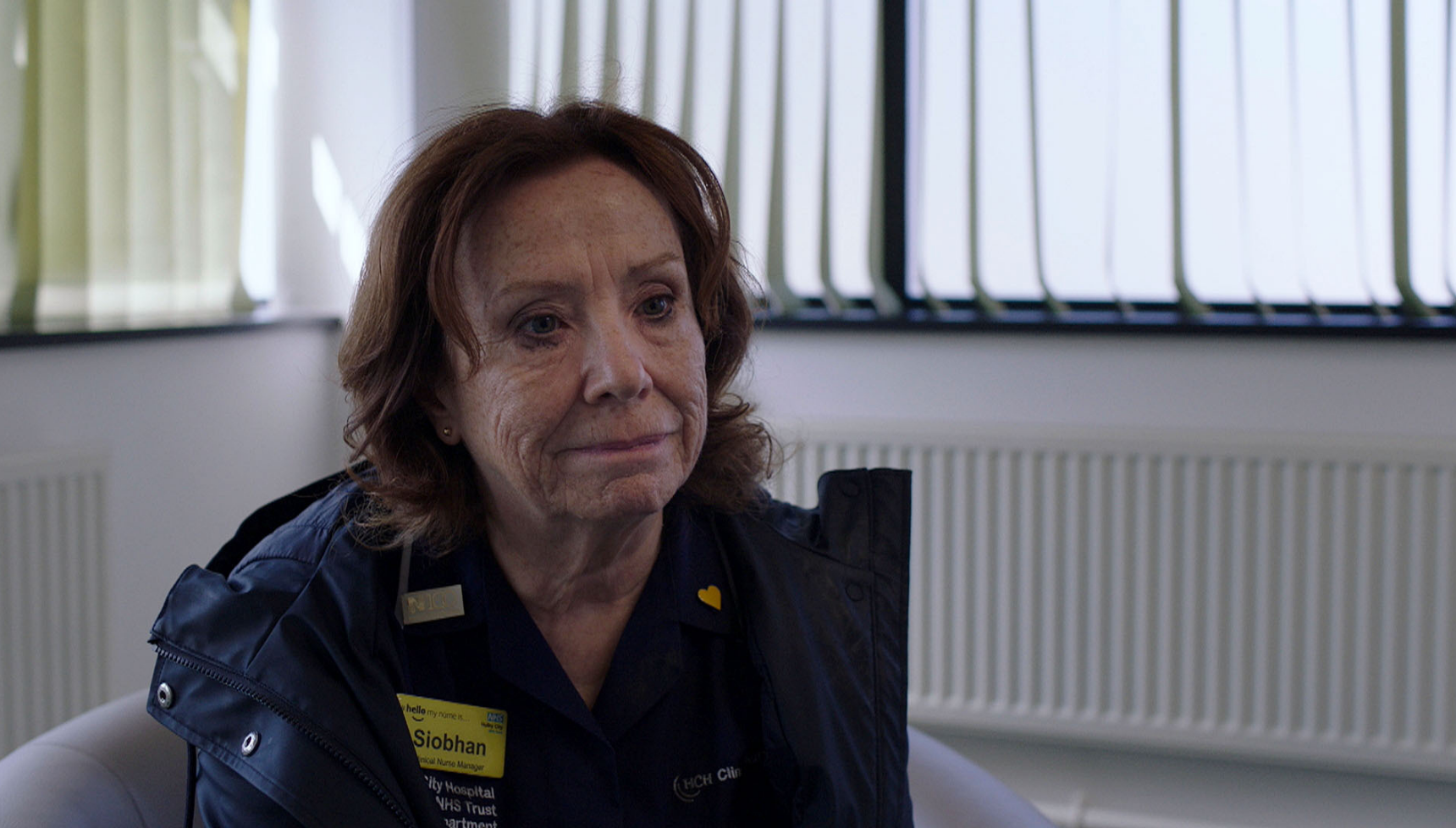
In a show filled with medical emergencies, this storyline stands out because the danger isn’t in a patient’s vitals. It’s in the invisible aftermath of violence — and the slow, fragile work of learning how to feel safe again.
For Siobhan, Cam isn’t a cure.
But in a world that suddenly feels unpredictable and threatening, he becomes something just as important: proof that understanding can exist without explanation, and that healing doesn’t have to be a solitary journey.