Casualty’s Leadership Under Fire: Flynn Byron and the Cost of Proving Holby Is Ready
In Holby City General, pressure is part of the job. But for Flynn Byron, the announcement that the CQC is returning to reinspect the department turns everyday stress into something far more personal — and far more dangerous. This isn’t just about passing another test. It’s about reputation, credibility, and whether the ED can convince the people watching that it’s still fit to protect lives.
Flynn’s response is immediate and uncompromising. He wants precision, discipline, and zero room for error. The problem is that pressure doesn’t always create perfection. Sometimes, it exposes the cracks.
Determined to demonstrate readiness, Flynn throws his weight behind a high-stakes training simulation — the kind designed to look impressive on paper and convincing in practice. On the surface, it’s exactly what the department needs: a visible display of preparedness, teamwork, and protocol. But beneath that surface, the urgency to perform starts to distort priorities.
Nowhere is that more obvious than in his treatment of Matty Linklater.
Matty is already carrying the fallout of a disastrous drill that turned into a real scare, and Flynn’s frustration finds an easy target. He comes down hard, pushing for higher standards and sharper focus. From Flynn’s perspective, this isn’t personal — it’s leadership. The ED can’t afford weak links, not with inspectors about to walk through the doors.
But leadership under pressure has consequences.
The more Flynn tightens control, the more brittle the atmosphere becomes. Mistakes feel bigger. Hesitation feels riskier. And the line between motivating a team and intimidating it starts to blur. The irony is painful: in trying to prove the department is safe, the environment becomes one where people are more likely to hide uncertainty instead of admitting it.
Flynn isn’t blind to that risk. He’s just trapped by the stakes.
A poor inspection wouldn’t just reflect on the hospital. It would reflect on him. On his decisions. On his ability to lead. The weight of that responsibility pushes him into a mode where results matter more than comfort — and where empathy becomes a luxury he feels he can’t afford.
The training simulation disaster is a warning sign.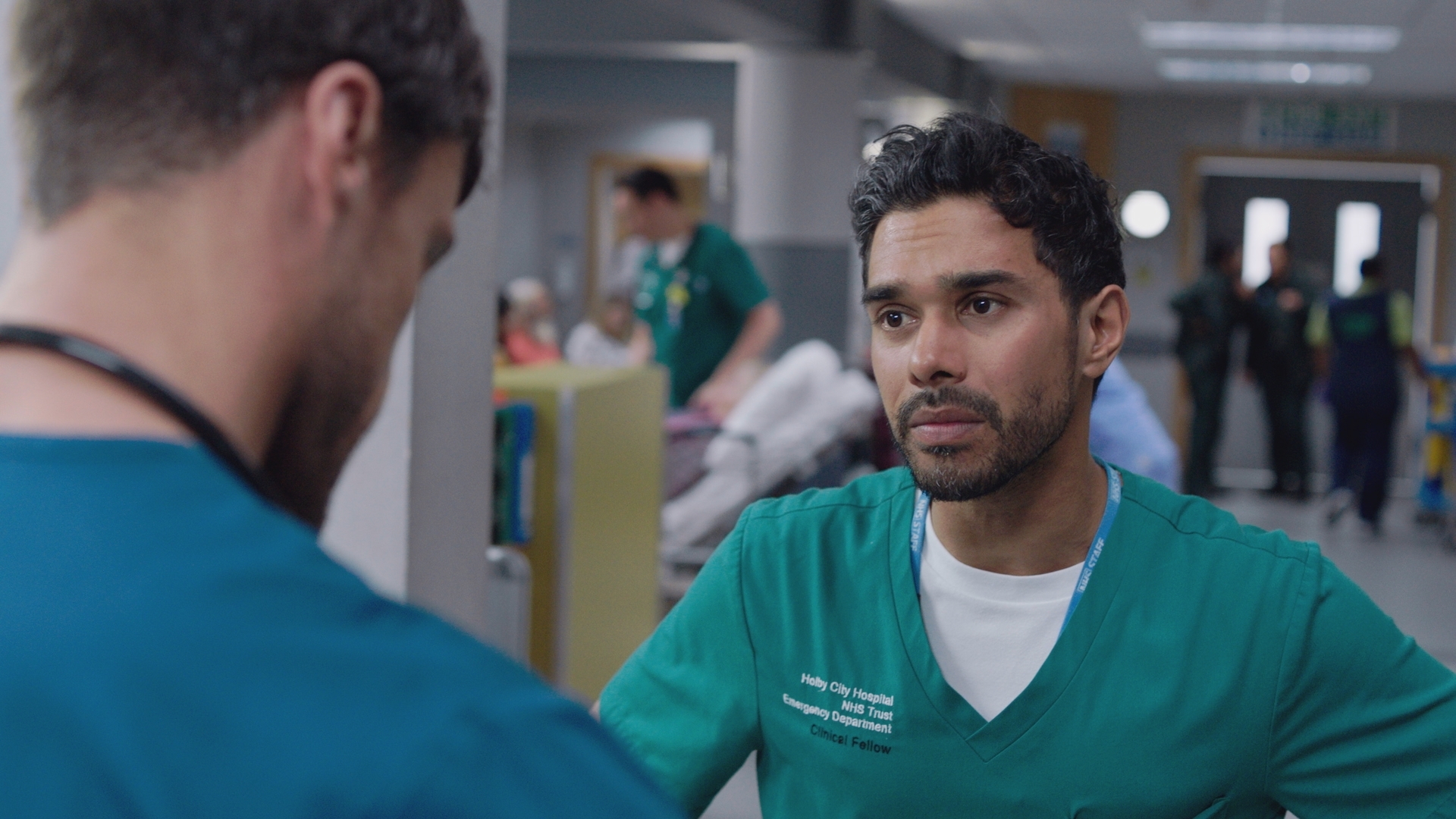
What was meant to be a showcase becomes a reminder that performance under scrutiny can backfire when people feel pressured to cut corners or prove themselves at all costs. Flynn’s shock at discovering protocols weren’t followed isn’t just anger — it’s fear. Fear that control is slipping. Fear that the story the inspectors see won’t match the one he needs them to believe.
What makes this storyline compelling is that Flynn isn’t portrayed as a villain. He’s a leader caught between ideals and reality. He wants the department to succeed. He wants patients to be safe. He wants his team to rise to the occasion. But the more he focuses on the inspection, the harder it becomes to see the people behind the performance metrics.
And those people — Matty, Kim, Dylan, the rest of the team — are already carrying their own pressures, secrets, and fears.
As the CQC’s return looms, the real question isn’t just whether Holby will pass.
It’s whether Flynn can recalibrate his leadership before the cost becomes too high.
Because in emergency medicine, trust matters as much as procedure. And in leadership, the hardest balance isn’t between success and failure — it’s between demanding excellence and remembering that the people delivering it are human.
Casualty has always thrived on moments where systems meet individuals. With Flynn at the centre of this storm, the show is asking a sharp, timely question: when everything is on the line, does proving you’re ready matter more than how you get there?